


Headquarters of the Spanish Maritime Forces
Fleet
Welcome to the website of the Maritime High Readiness Headquarters (Cuartel General Marítimo de Alta Disponibilidad – CGMAD) of the Spanish Navy. CGMAD is an operational-level maritime headquarters within the Fleet structure. It brings together two complementary command elements:
- The Maritime High Readiness Headquarters (CGMAD), responsible for planning and conducting maritime operations as assigned.
- The Spanish Maritime Forces Headquarters (SPMARFOR), a high-readiness, deployable maritime command offered to NATO.
Together, they form a dual headquarters structure that ensures both national operational responsibilities and full integration within allied maritime frameworks.
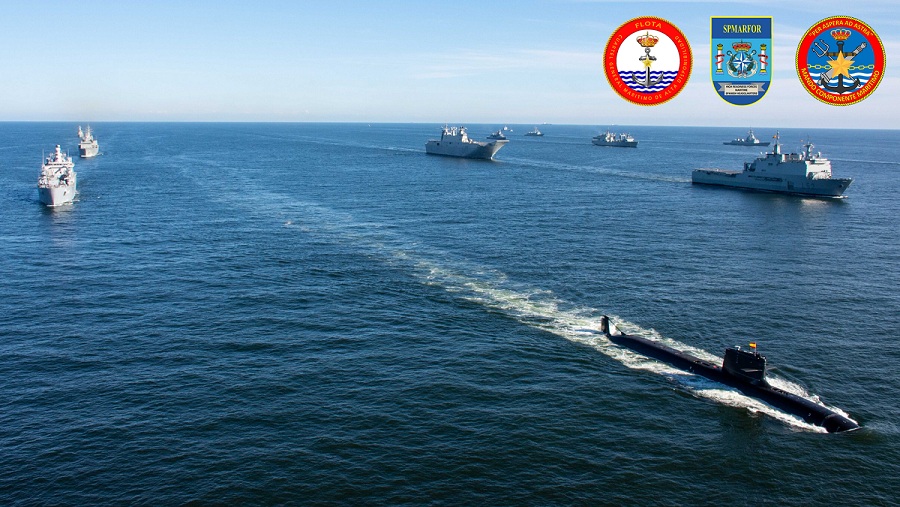
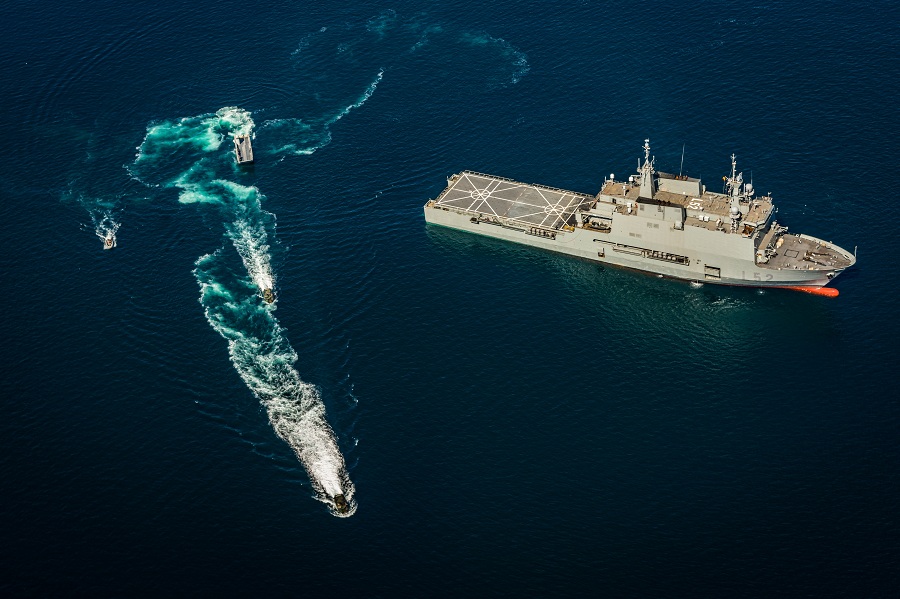
This HQ commands naval forces and conducts major exercises and operations, normally embarked on board its command ship, the amphibious assault ship Castilla. Embedded within CGMAD is a multinational unit forming part of NATO’s Force Structure: the Spanish Maritime Forces Headquarters (SPMARFOR). In addition to routinely operating alongside Allied and partner maritime forces, SPMARFOR periodically assumes the role of Maritime Component Command (MCC) within the NATO Response Force framework, currently known as the Allied Reaction Force (ARF).
Together, CGMAD and SPMARFOR form a scalable and deployable maritime headquarters, capable of operating at national level and fully integrated within NATO’s command and force structures.
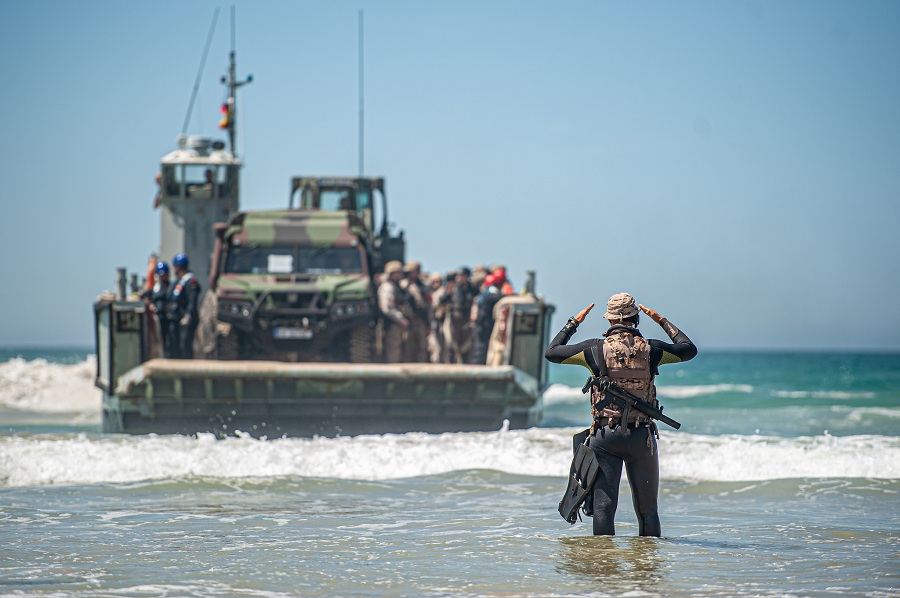
CGMAD is embedded within the Spanish Navy’s Fleet structure and operates under the authority of the Admiral of the Fleet (ALFLOT).
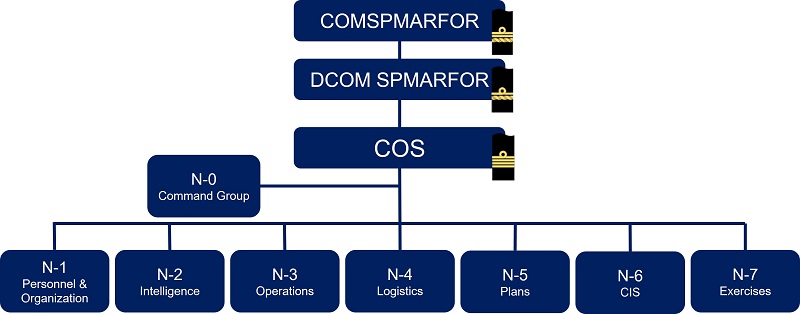
The Maritime High Readiness Headquarters maintains a permanent staff of approximately 90 personnel. In peacetime, the Headquarters is organized into standard Navy staff divisions:
- N-0: Command Group
- N-1: Organization and Personnel
- N-2: Intelligence
- N-3: Operations
- N-4: Logistics
- N-5: Plans
- N-6: Communications and Information Systems
- N-7: Exercises
In addition, CGMAD includes international personnel from Allied navies assigned to SPMARFOR, comprising up to 12 established multinational positions from:
- France
- Germany
- Greece
- Italy
- Latvia
- Portugal
- Spain
- Türkiye
- UK
- USA
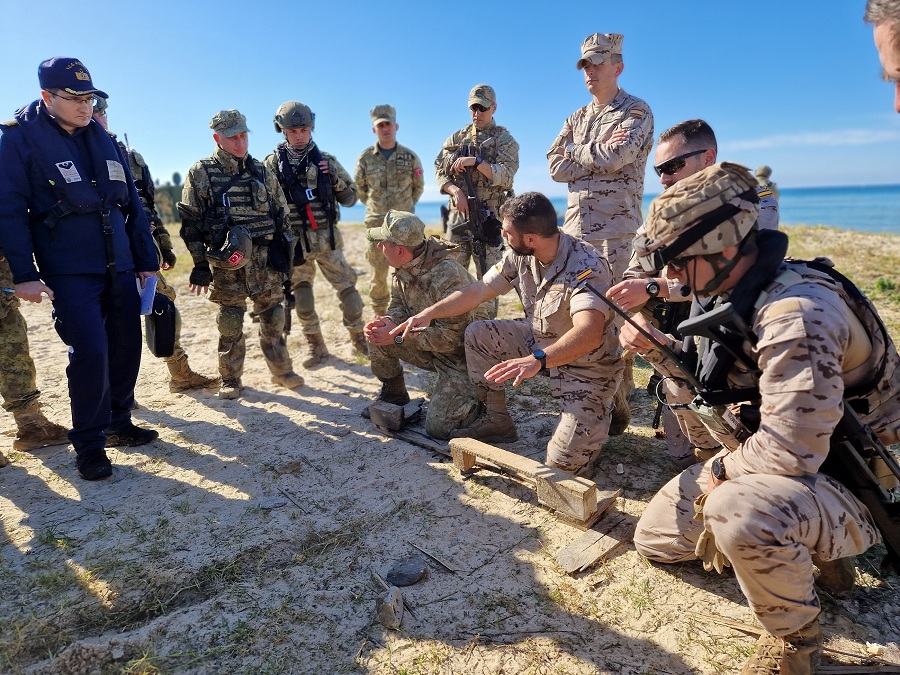
For the conduct of operations or major exercises, particularly in times of crisis or conflict, the Headquarters transitions to an expanded operational configuration. This structure enables the command and control of a naval force and the conduct of multidomain operations. When activated in this configuration, the staff may be reinforced up to approximately 220 personnel, incorporating augmentees from other naval units, joint forces and allied nations.
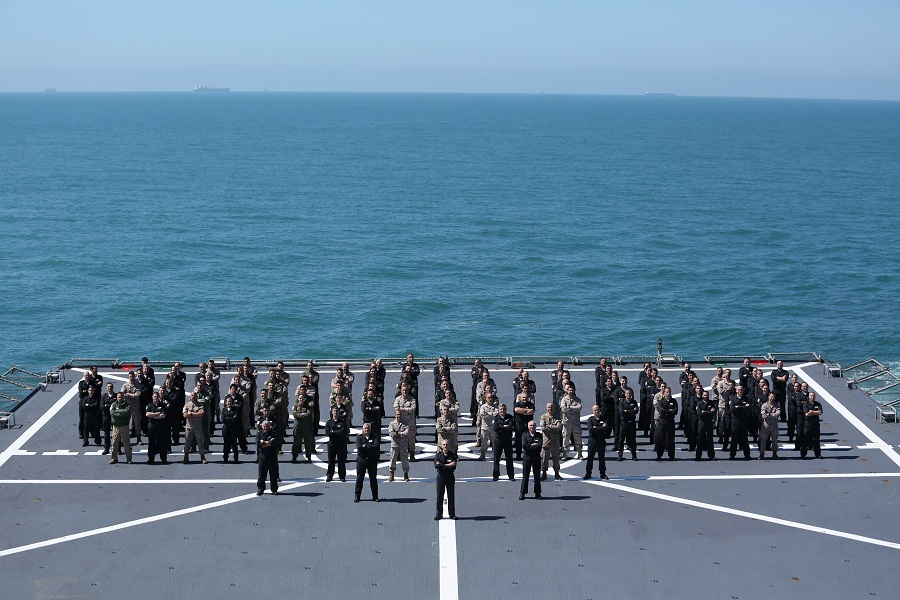
The Maritime High Readiness Headquarters (Cuartel General Marítimo de Alta Disponibilidad – CGMAD) is a permanently available and deployable command element designed to support a Commander in the command and control of an operational naval force. As such, it can adopt different configurations depending on the assigned mission and operational context. Its main tasks include:
- Operational planning at the maritime level.
- Exercising command and control of assigned forces, either as MCC or CTF.
- Maintaining high readiness and interoperability.
- Conducting the advanced training for the Spanish Fleet.
- Generating and preparing deployable Operational Maritime Headquarters (SNMGs, ATALANTA FHQ, etc.).
- Preparing and offering SPMARFOR as a deployable maritime headquarters for NATO and multinational operations.
Through its dual structure, CGMAD guarantees both national operational capability and the ability to integrate seamlessly into allied command structures.
Within the Spanish Joint Force framework, CGMAD can be configured as a two-star Maritime Component Command (MCC). In situations of crisis or conflict involving a non-shared threat, the Joint Force may require the activation of a three-star Maritime Component Command under the command of the Admiral of the Fleet (ALFLOT). In November 2022, such a 3-star Maritime Component Command was activated for the first time, with CGMAD serving as its core element during the joint exercise JFX-22.
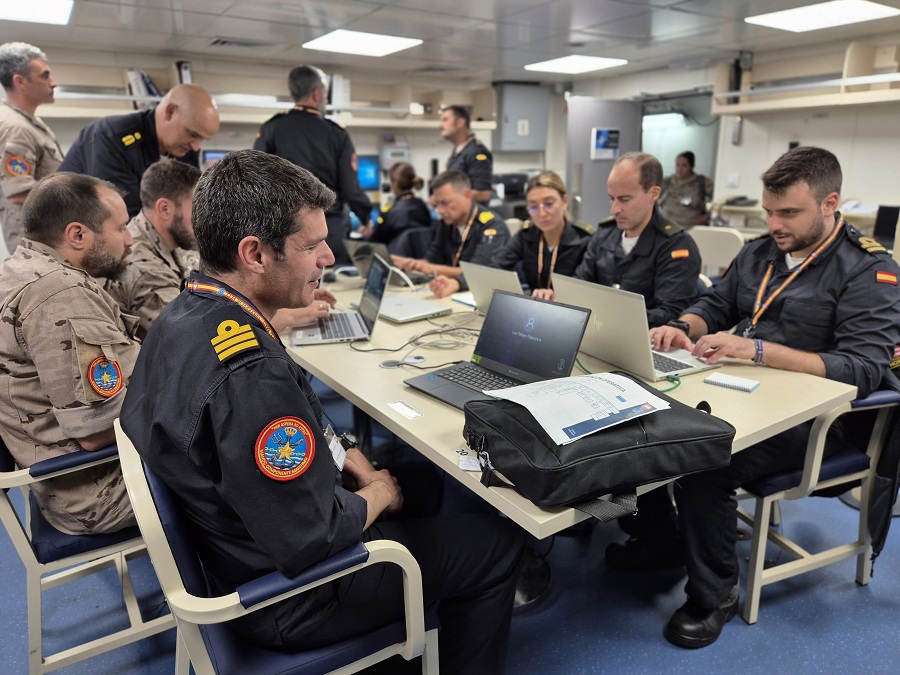
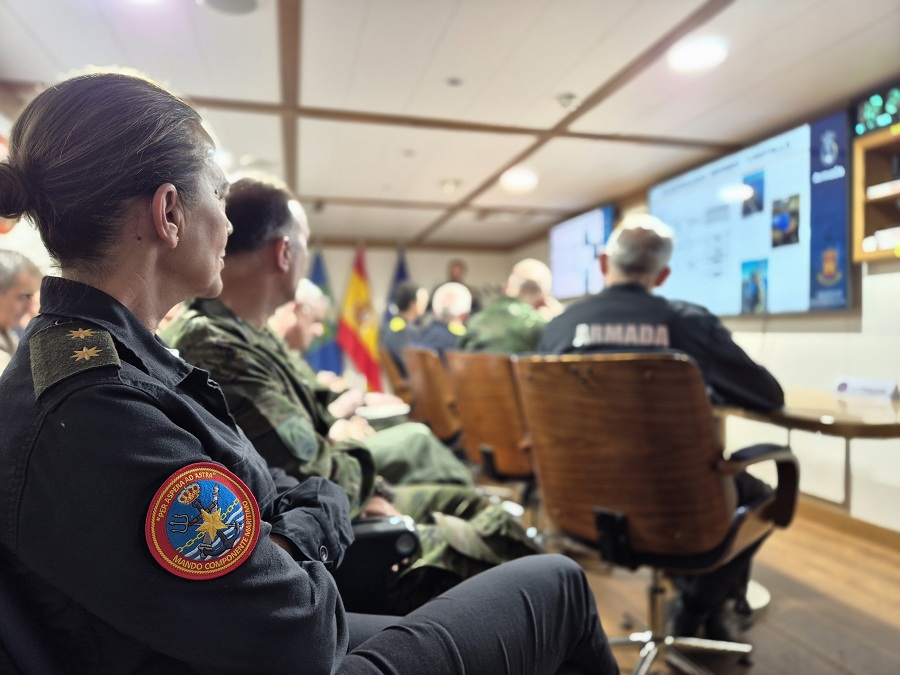
CGMAD is also a multinational unit forming part of NATO’s Force Structure under the designation Spanish Maritime Forces Headquarters (SPMARFOR). In this capacity, and in addition to regularly operating alongside Allied and partner maritime forces, SPMARFOR periodically assumes the role of Maritime Component Command within NATO’s rapid response framework, currently known as the Allied Reaction Force (ARF). SPMARFOR lead the ARF Maritime Component Command from July 2025 to July 2026.
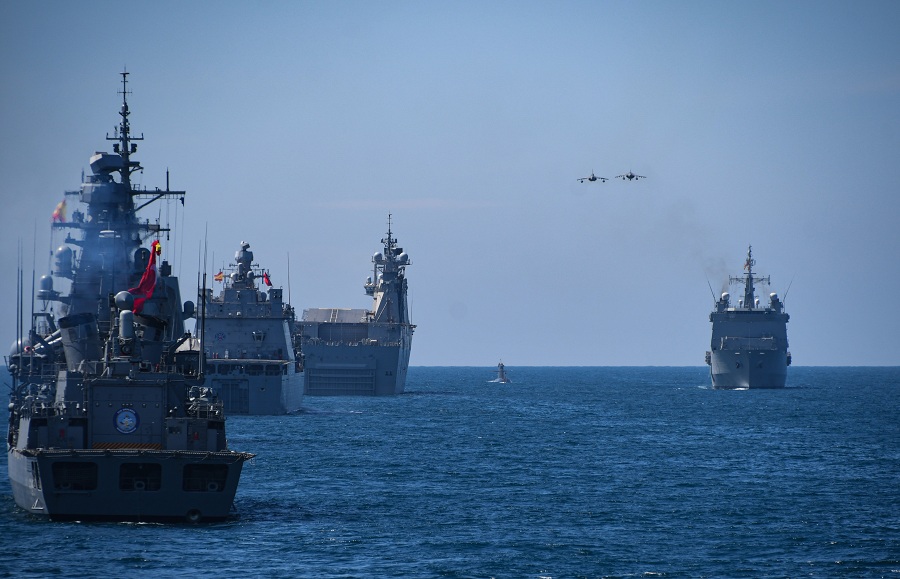
In its two-star operational configuration, CGMAD commands and conducts major exercises and operations from a dedicated command platform, normally the amphibious assault ship ESPS Castilla. Through the high level of tactical and operational expertise developed within the Headquarters, CGMAD personnel actively contribute to doctrinal development, operational planning and multinational coordination. In addition, CGMAD/SPMARFOR personnel participate in evaluation and certification processes of Allied and national headquarters, particularly within the NATO rapid response framework, during major exercises such as Dynamic Mariner & Steadfast Dart NATO series and also Spanish Fleet series FLOTEX.
The origins of SPMARFOR predate the creation of the NATO Response Force (NRF) in November 2002. The NRF was conceived as a joint, high-readiness force designed to provide the Alliance with a rapid response capability for both collective defence and crisis response operations.
Within the maritime domain, selected High Readiness Forces (Maritime) – HRF(M) – were designated to assume the role of Maritime Component Commander (MCC). Four nations — Spain, France, Italy and the United Kingdom — committed such headquarters to NATO. In this context, the Spanish HRF(M), known as SPMARFOR, was established and remained active in this configuration until 2009. To fulfil NATO requirements, the Spanish HRF(M) had to be capable of operating from a suitable command platform at sea and of conducting and controlling the full spectrum of maritime operations, including amphibious operations, fixed-wing air operations, expeditionary missions and strike operations.
In 2009, a significant reorganization of the Fleet took place. All operational naval forces were placed under the authority of the Admiral of the Fleet (ALFLOT). At that time, the Commander of SPMARFOR, in addition to his HRF(M) responsibilities, assumed the role of ALNAV, exercising organic command over the Naval Action Force (FAN).Subsequent evolution of the Spanish Armed Forces towards a Joint Force model and a structured Operational Command framework required more flexible and scalable maritime command arrangements.
As a result, in 2019 the Spanish Navy implemented a further reorganization. The ALNAV structure was dissolved and the Maritime High Readiness Headquarters (CGMAD) was created as a deployable operational headquarters without permanently assigned units. CGMAD was designed to generate national maritime operational staffs in different configurations and, when offered to NATO, to operate as SPMARFOR, assuming command of all maritime forces assigned within the NRF framework.
In July 2024, the Allied Reaction Force (ARF) replaced the NRF as part of NATO’s New Force Model, agreed at the Madrid Summit in 2022. The ARF was established to enhance the Alliance’s speed of response while increasing the pool of available forces.SPMARFOR is scheduled to assume the ARF Maritime Component Command (MCC) duty for one year starting on 1 July 2025. To this end, the Headquarters underwent a comprehensive certification process beginning in September 2023, including participation in major NATO exercises such as STEADFAST DAGGER 24, DYNAMIC MARINER / FLOTEX-25 and STEADFAST COBALT 25.
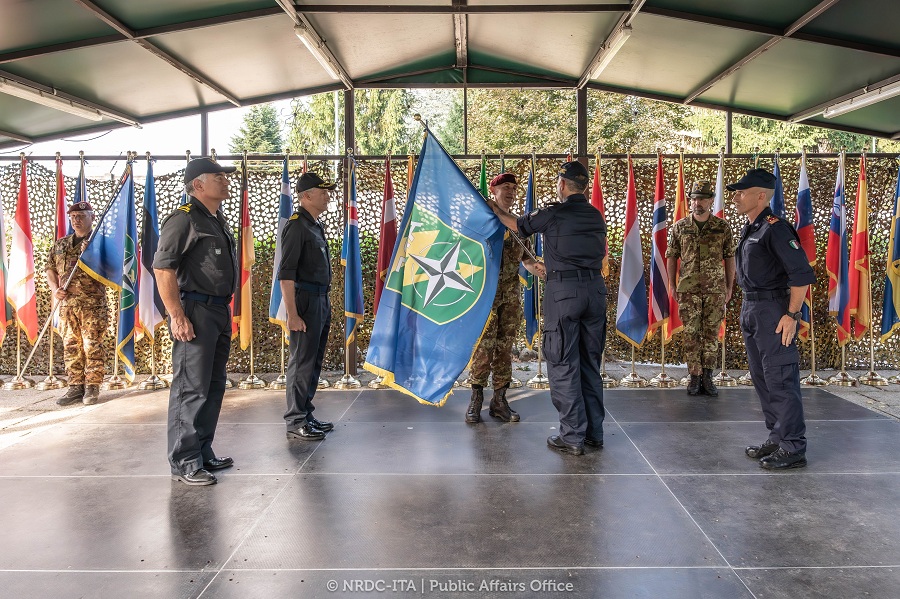
Regarding its integration within the Spanish Joint Force, CGMAD can also be configured as a two-star or three-star Maritime Component Command. In situations of crisis or conflict involving a non-shared threat, the Joint Force would require a three-star Maritime Component Command under the command of ALFLOT. In November 2022, such a 3-star Maritime Component Command was activated for the first time, with CGMAD serving as its core element during the joint exercise
| Commanders | Assumed Command | Relinquished Command |
|---|---|---|
| Vice Admiral Fernando Armada Vadillo | 18/09/2001 | 27/10/2003 |
| Vice Admiral José Antonio Martínez Sainz Rozas | 31/10/2003 | 01/10/2006 |
| Vice Admiral José Francisco Palomino Ulla | 01/10/2006 | 05/09/2008 |
| Vice Admiral Juan Antonio Cuadrillero Pinilla | 06/10/2008 | 15/05/2011 |
| Vice Admiral Juan Rodríguez Garat | 19/04/2011 | 28/04/2013 |
| Vice Admiral Manuel Garat Caramé | 16/09/2015 | 12/05/2017 |
| Vice Admiral Antonio Martorell Lacave | 06/06/2017 | 20/05/2020 |
| Vice Admiral Eugenio Díaz del Río Jáudenes | 28/05/2020 | 22/02/2021 |
| Vice Admiral José María Núñez Torrente | 26/02/2021 | 31/08/2024 |
| Vice Admiral Juan Bautista Pérez Puig | 06/06/2024 | - |


